
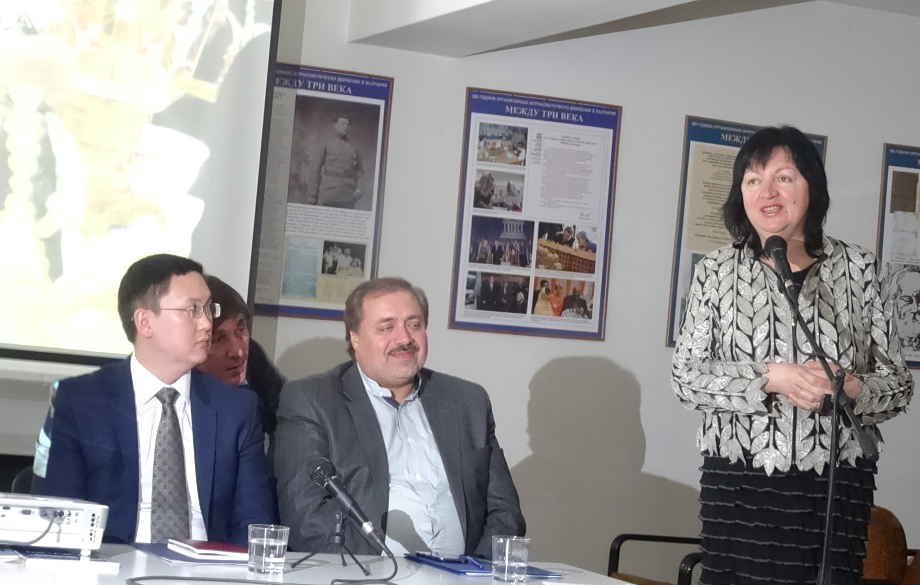
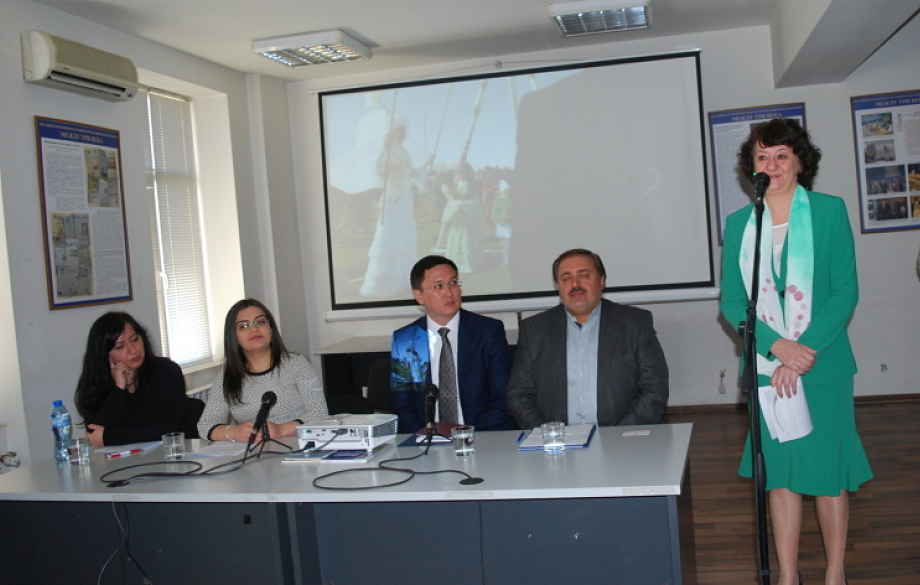
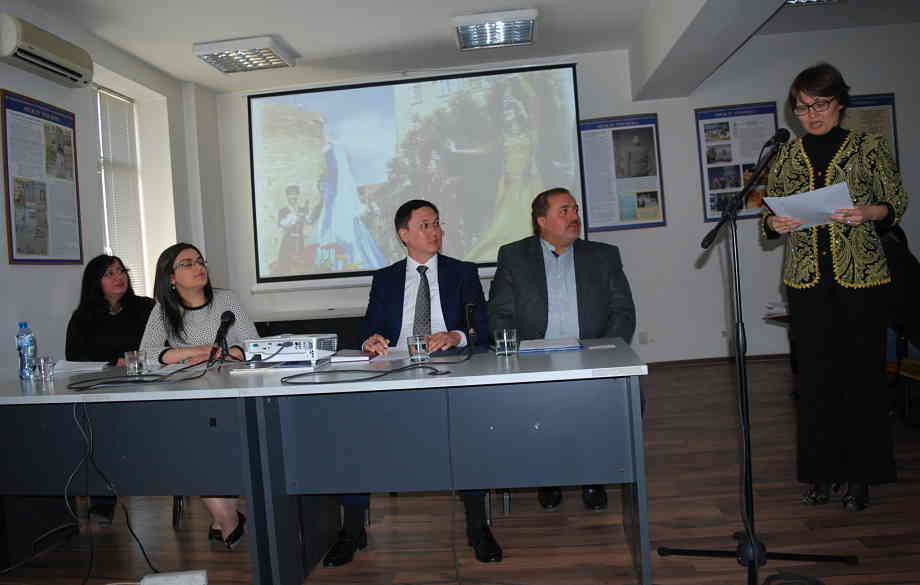
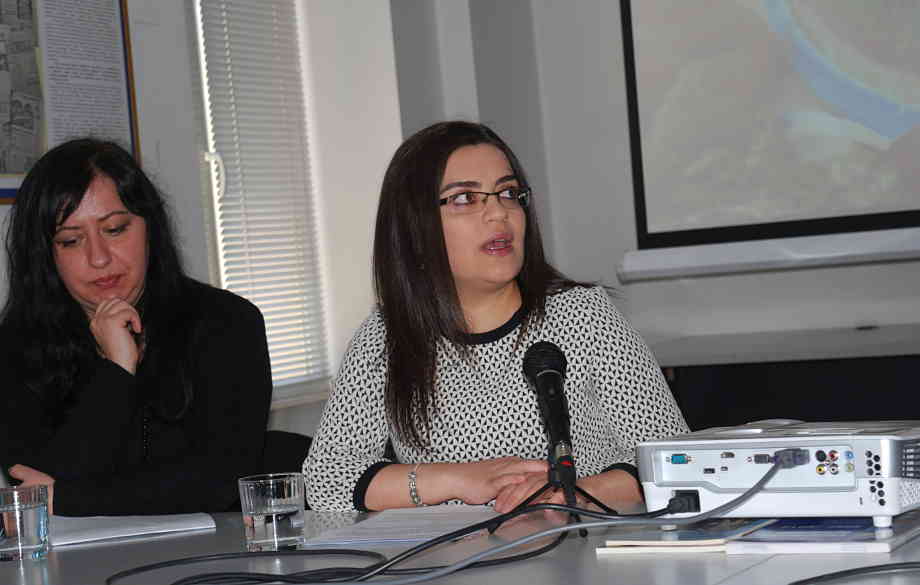
A round table on this topic gathered many diplomats, media representatives and cultural figures in the hall of the Union of the Bulgarian Journalists on the 27th of April. The event was another initiative of the association "Spectrum 21" - "Show Tradition, Gift a holiday "
. It was accomplished jointly by the Union of the Bulgarian Journalists with the media partnership of the "Diplomatic Spectrum" magazine. Guests and participants of the round table were diplomats from the embassies of the Republic of Azerbaijan, the Islamic Republic of Iran, the Republic of Kazakhstan, the Republic of Macedonia, scientists from the Institute of Ethnology and Folklore Studies with the Ethnographic Museum at BAS, a representative of the Bureau of the National Commission for UNESCO and others. The Bulgarian audience had the opportunity to examine more closely the history of the holiday, its preparation and implementation. Before the serious part of the event, however, all guests were immersed in the atmosphere of Novruz through a short recital by the students of the Russian lyceum in Sofia with the director Mrs. Shara Karsakpaeva. A multimedia presentation of the holiday in different countries also helped to build a more complete impression of it.
Novruz is celebrated in different ways by many people and an important element of it is the fire. It is a day for family and friends, for festive meals, for dancing and singing. In 2009, on the initiative of Azerbaijan, India, Iran, Kyrgyzstan, Pakistan, Turkey and Uzbekistan Novruz was inscribed in the Representative List of the Intangible Cultural Heritage of Humanity by UNESCO, and in 2010 the UN General Assembly declared the 21st of Marchas the International Day of Novruz. The initiative then was of Azerbaijan, Albania, Afghanistan, India, Iran, Kazakhstan, Kyrgyzstan, Macedonia, Tajikistan, Turkmenistan and Turkey. Novruz is celebrated in various parts of Bosnia and Herzegovina, Iraq, China and the Russian Federation.
In her report on Novruz, the conceptual engine of the event - Mrs. Gulmira Bakirova from Kazakhstan underlined its ancient history and outlined the similar parts of the celebration in different countries.
Novruz - a celebration of the new year on the astronomical solar calendar of the Iranian and Turkic peoples
Novruz is celebrated on the vernal equinox and has a special place in the culture of human civilization. It has left its mark on the ancient, medieval and modern history of almost all nations in the world.
Novruz is the oldest celebration of the New Year on the Earth. "At the level of everyday life and consciousness, it remains one of the holidays, honouring the sun, the fire." - says Acad. Akbar Tursunov, a well-known Tajik cultural historian.
History
The holiday is known from the Zoroastrian times. It was noted before the VII century BC. In the countries of the Achaemenid (VI - IV century BC) and Sassanid (III - VII century BC) Novruz is considered a major holiday. The ancient Greek historian Strabo wrote of it: "From the most ancient, ancient times and until today the people of Mesopotamia (the rivers Syr Darya and Amu Darya) gather on this day in the Temple of Fire. It is the most honoured holiday-the merchants close their shops, artisans stop their work, everyone is having fun, everyone is treating the otherwith drinks anddishes, touched by the fire."
The oldest source which mentions the celebration of Novruz is the holy book of the Zoroastrianism "Avesta". The celebration of the vernal equinox is associated to the people of Central Asia and Iran,with the emergence of the solar calendar seven thousand years ago, long before the advent of Islam. According to it, the year begins in the spring – on the 20thor the 21st of March, when the day is aligned with the night and spring assumes its rights. A new time for the field workcomes, a time for care and hope for farmers. One year according to the solar calendar has 365 (366) days, which coincides with the modern calendar.
According to old Turkic legends this is the day on which the Turks have come out of Ergenekon - an area surrounded by mountains. That is why Novruz is considered the beginning of new life in the New Year and is celebrated to this day as such.
Having its roots in ancient traditions of farmers from the Middle East and Central Asia, the holiday has not only survived the Arab invasion but has become an integral part of the culture of many people professing Islam.
The celebration of Novruz is rooted in the era of human history before writing was invented. It has acquired an official status in the Achaemenid Empire as a religious holiday of Zoroastrianism. But it continues to be celebrated after the Islamic conquests and until the present.
The common in the traditions of the different people
There are several similarities in common among the various nationswhen preparing the feast and celebration.
Everywhere before Novruz people update and repair their houses; and cleanthe surrounding area. They decorate their homes, wash their clothes, especially the children’s, to protect them from the evil eye.
Everywhere, the week before Novruz is dedicated to the souls of the ancestors. There are also commemorations, they are given gifts and people pray for help and protection from harm for the next year.
The holiday is celebrated outdoors as a fair. Gamesare carried out, as well as, sports competitions; people sing and dance.
Fires are lit. Everyone has to jump over them – eitherseven timesover one fire or onceover seven fires.
On the last evening of the old year the people spray each other with water and leap over running water to cleanse themselves from their sins of the past year.
On the table there are always seven dishes. The seven magical items and food are as a symbolic gift of the sun. It is believed that by accepting this gift, it promises to take care of the rich harvest this year. On the table there should be a big festive cake or bread with a round shape, reminiscent of the sun, a bowl of water in which a green leaf flows, a bowl with rose water, fruits, nuts, almonds, fish, rooster, milk, yogurt, cheese, painted eggs. In ancient times, each component was especially important for next year's harvest, for the fate of the family members. Nowadays, the symbolism has beenlost; perhaps only in some places people still remember it.
These are the common features. Of course, every country has different traditions and specific features of the celebration. They make the festival more colourful and more interesting.
In Turkmenistan, Novruzis celebrated as a sign of the revival of ancient customs and traditions of the Turkmen people. Part of the Christmas traditions there are unique - dishes with names "Kodje", "Yarme" and "Samani", are cooked and different games for young people are held, such as "Mundzhuk Atday" - throwing beads.
In Uzbekistan, as in other countries of Central Asia, the day of the New Year is a public holiday. Recently it was celebrated in the country as the Day of freedom and independence. In the New Year customs the cooking ceremony of "samanak" is also included; it is done in a special way. After that the people joyously sing. Other traditions in Uzbekistan are: conducting poetic evenings, meetings with poets and writers, visiting the tombs of religious leaders, giving away gifts, placing the cover "haftsin".
In Pakistan, the holiday is called "alyamafruz" - a new destiny illuminating the world. In the New Year days Pakistanis refrain from pronouncing unworthy words, they greet one another with respect and sincerity. People compose poetry in Urdu, Dari and Arabic languages. They believe that the purpose of Novruz is to create hope, security and peace in the Islamic world and humanity.
Finally I will quote Mrs. Irina Bokova, Director-General of UNESCO: "Navruz notes the New Year and the arrival of spring in many countries in the Western, Central and Southern Asia, the Caucasus, the Balkans and other regions. This age-old celebration of diversity, dialogue and solidarity unites people from different cultures, religions and languages, linking families and communities together.
Celebrated beyond so many boundaries, Navruz has given the beginning of customs, rituals and holidays, which are often associated with nature and fertility. Songs, dances, festive meals and other social practices that are an integral part of Navruz create a live demonstration of creative diversity, which UNESCO strives to promote throughout its work. In 2009, Navruz was inscribed in the Representative List of the Intangible Cultural Heritage of Humanity by UNESCO - one year later, the UN General Assembly adopted a resolution recognizing the21st of March as the International Day of Navruz.
The core values of Navruz are those of peace and solidarity, reconciliation and good neighbourliness. This is a celebration of diversity based on the tolerance and harmony with the nature, promoted and passed on from generation to generation within and between communities. These messages are particularly important today in this landmark year for the Millennium Development goals and after the Member States designed a new program for global sustainable development. The Intangible Cultural Heritage of Humanity is a source of confidence and belonging - it is a source of strength and creativity for the benefit of all.
In these uncertain and turbulent times, let us all embrace the values of Navruz and transpose its message of peace, harmony, tolerance and understanding. "
- Mr Vyusala Sadagova, third secretary at the Embassy of the Republic of Azerbaijan, stressed the specifics of the holiday in her homeland during her speech.
Nowruz in Azerbaijan
The Azerbaijani people have several holidays connected with agriculture and stock-rearing, which have been celebrated since time immemorial. But the holiday of Nowruz, which marks the coming of a new astronomical year and the reawakening of nature, has always been the Azerbaijani people’s most cherished holiday. It is celebrated on the day of the astronomical vernal equinox, which usually occurs on the 21st of March. Though its spelling and pronunciation may vary by country, the word Nowruz means “New Day” and symbolizes the beginning of a new year.
Nowruzis an ancient holiday, which can be traced 5 000 years back to the Sumerians and the Babylonians civilisations.
According to tradition, people begin to prepare for this holiday from the last month of winter, they continue the holiday celebrations with the arrival of the equinox and carry on celebrating into the New Solar Year. Before Nowruz, Azerbaijanis celebrate 4 winter days, symbolizing the end of the Old year and the beginning of the New Year. These days are the four pre-holiday Tuesdays:
- Su Chershenbe (Water Tuesday);
- Odlu Chershenbe (Fire Tuesday);
- Torpag Chershenbe (Earth Tuesday);
- Akhyr Chershenbe (Last Tuesday).
According to the traditional beliefs water is reborn on the first Tuesday: still waters come to motion; fire is reborn on the second one, the earth - on the third. On the fourth Tuesday the wind opens tree buds and the spring begins.
Azerbaijanis love Nowruz for its democratic philosophy. It is not just a holiday to mark the vernal equinox; it is a holiday of the equality of people. It brings together different sections of the population, strengthens mutual esteem, mutual understanding and social cohesion.
For centuries the celebrations of Nowruz in Azerbaijan have left an indelible mark on the poetic heritage. There are many poems devoted to Nowruz written by classical authors and modern poets. People have always sung songs about Nowruz, both folk songs and professional pieces. The great Azerbaijani poet Nizami Ganjavi wrote in his Khamsa or Five Tales that Nowruz was celebrated in 350 BC, that is, 24 centuries ago.
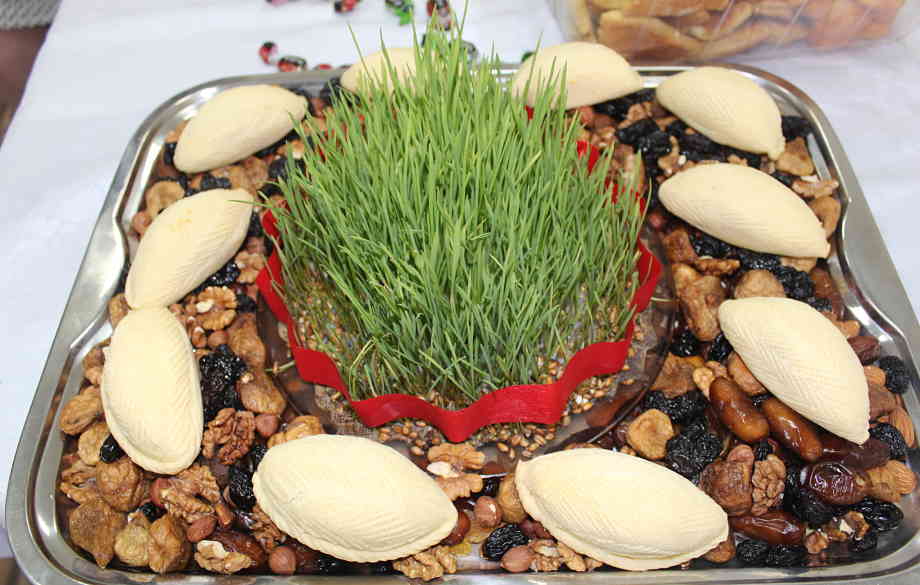
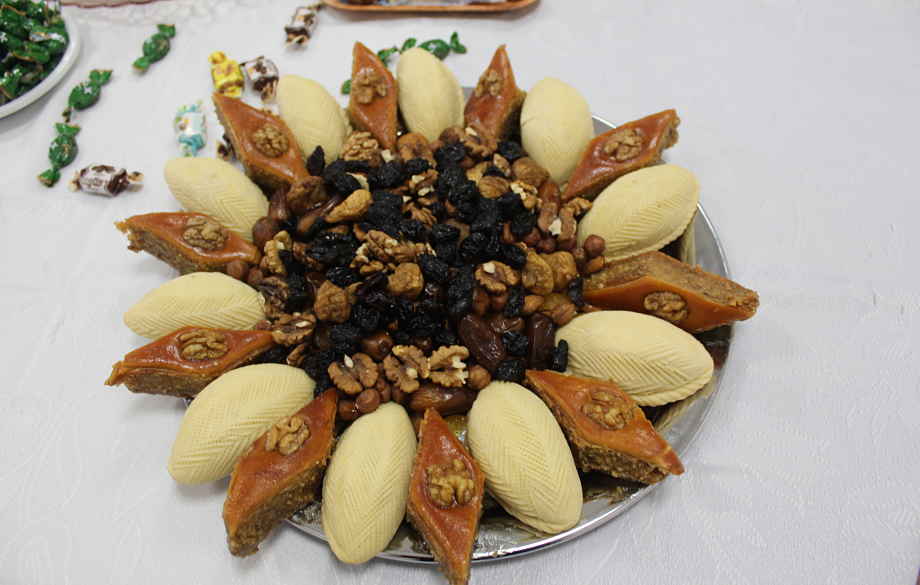
Nowruz is a day for family and friends, for festive meals, for dancing and singing.Every year, on the eve of Nowruz traditional sweets are made such as shakarbura, bakhlava, shorgoghal. The decoration of the festive table is khoncha, a big tray with "samani" -- freshly sprouted wheat as a symbol of hope for an abundant harvest in the coming year.The table should have seven dishes starting by the letter “S”. It should also reflect sumah, vinegar, milk, greens. Mirror and candles are also put on the table. Colored eggs are placed in front of the mirror. All of this is full of many symbols: the candle means fire and light which protects anyone from the evil eye. The mirror symbolizes clarity.
Traditional Beliefs Related to Novruz
It is a golden rule that in the days around the holiday cursing, lying, swearing, gossiping or criticizing is not allowed - in other words, nothing bad should be said.
An unwritten law is that people who have quarrelled or had attacked one another, must be reconciled without mediation. And it is considered a sin not to forgive the one who recognizes his guilt. Azerbaijanis called the second day of Novruz Ata-Baba, that is, "fathers, grandfathers" and it is whenthe whole family visits the graves of their nearest and dearest.
If it is possible, everyone should celebrate Novruz in their own home with their family.
A ritual prescribed from Zoroastrianism in ancient times and preserved until today is the last Tuesday before Novruz – Akhir Charsanba, everyone jumps over fire, ignite torches and put lit candles on the table. At night and during the day must be lit as many candlesas are the family members and they should not be put out but left to burn until their end.
During the Novruz, people in Azerbaijan give to neighbours and friends festive portions called novruzpie. People put in a tray - honcha, holiday sweets, sprouted wheat germ and candles and send it to their relatives. The tray should not be returned empty, because the popular belief is that if so, the house will not prosper. It is goodfor this New Year exchange not to take placesolely between Azerbaijanis but also with representatives of other nationalities, so they can enjoy the sweetness of Novruz.
Over the last decade the festival has gained international fame. In 2009, it was listed in the Representative List of the Intangible Cultural Heritage of Humanity by UNESCO. I am proud to say that on the initiative of Azerbaijan and other countries where Novruz is celebrated, the UN General Assembly declared the 21st of March as the International Day of Novruz by the adoption of the resolution. The resolution calls on Member States to maintain the culture of Novruz, to study the roots and traditions and to raise international awareness of this holiday.
This is particularly important in 2016 as we, in Azerbaijan, declare this year as one of multiculturalism, which includes the fact that people from different ethnic, religious and racial backgrounds can live together peacefully and connect through culture and traditions.
In Azerbaijan there is a tolerant atmosphere for different nations and religions. The national policy is determined by the principles of tolerance and peaceful coexistence of different nationalities, ethnic groups and religious minorities. Representatives of various nationalities, ethnic groups and religious minorities freely celebrate their holidays. Let me mention that in the coming days the Azerbaijan Orthodox Christians will celebrate Easter.
In conclusion, let me thank the organizers of the round table that gave us the opportunity to discuss Novruz and the traditions associated with it in different countries.
Let the spirit and values of Novruz live all year round!
This is a big celebration in Kazakhstan, said in his speech Mr. Baurzhan Sarsembekov, Second Secretary at the Embassy of the Republic of Kazakhstan. Because for the Kazakhs
Nauraz is a celebration of the renewal of nature at the beginning of a new year, a new life
The modern Kazakh name for the New Year - Nauraz came from Farsi: "Nau" - new, "Ruz" - day. Prior to that, Kazakhs called the New Year "ulaskun" - the day of the whole tribe. On the festive table relatives asked for and received forgiveness, they exchanged gifts and they wishedall the best. After a long winter, with the arrival of spring the feast of the birth of life is celebrated. The main dish on it - naurazkozhe, includes seven mandatory elements embodying the 7 basics of life - water, meat, salt, oil, flour (rice and wheat), cheese and milk - symbolizing happiness, luck, wisdom, health, wealth, fast growth, protection.
In spring people rush to renew themselves physically and spiritually – they try to get rid of debts, old unnecessary possessions, they patch their clothes, repair their homes and the wells, ask for forgiveness from their family, invite guests and donate gifts to relatives.
Everyone should go to seven houses and meet seven guests at home. Today Kazakhs meet Nauraz outdoors - in the streets, squares, parks. Competitions of Akin and national sports are held - kazakshakures, togazkumalak, kyzkoo, baiga.
Different traditions and rituals teach people to respect national culture and promote cohesion and mutual understanding between each other. Duringthe celebration of the feast, the Nauraz involves all the ethnic groups living in Kazakhstan, and they are more than 150.
A unique institution operates there - the Assembly of People of Kazakhstan, and after a few days we celebrate the 1st of May - the Day of Unity of the People of Kazakhstan. The meaning of all these festivals is that we do not divide, but we are united as a people, while respecting the traditions and customs of each ethnic group.
Interesting facts were presented by Ch. Assist. Prof. Yelis Erolova by the Institute of Ethnology and Folklore Studies of the Ethnographic Museum at BAS in her report - "Navrez in the Crimean Tatars in Bulgaria and Romania"
The report can be read on the website under "Bulgaria/Culture".
- Mohammadali Kiani, Advisor of the Cultural Affairs at the Embassy of the Islamic Republic of Iran in his report "Novruz in the Iranian civilization" considers the holiday as a bridge between nature and man.
The report can be read on the website under "World/Culture".
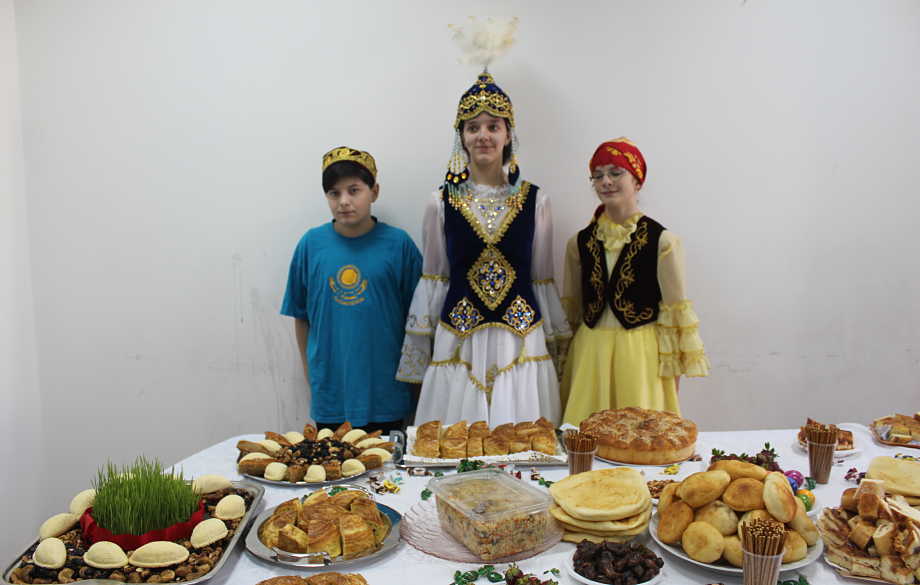
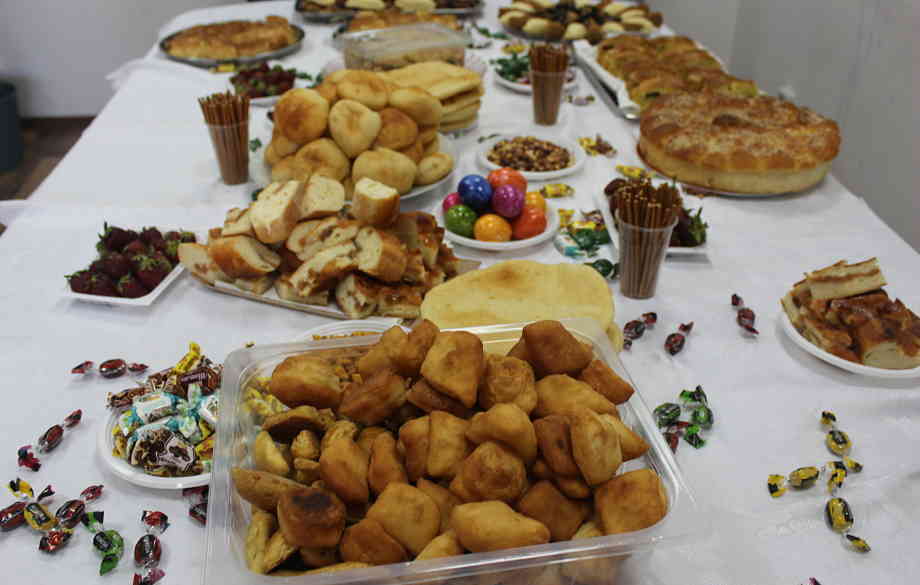
The debates after the reports showed that such events help people around the world get to know each other better and therefore be understood better. Mr. Mohammadali Kiani proposed to organize a bigger celebration in Bulgaria next year, supported by the countries that celebrate Novruz and have diplomatic missions in Bulgariaand thus the event to be marked largely and the people to be together. The talks continued after the end of the round table whenthe guests had the opportunity to taste and enjoy Cossack and Azerbaijani specialties, which are specifically prepared for Novruz and occupy an important place in it.


|
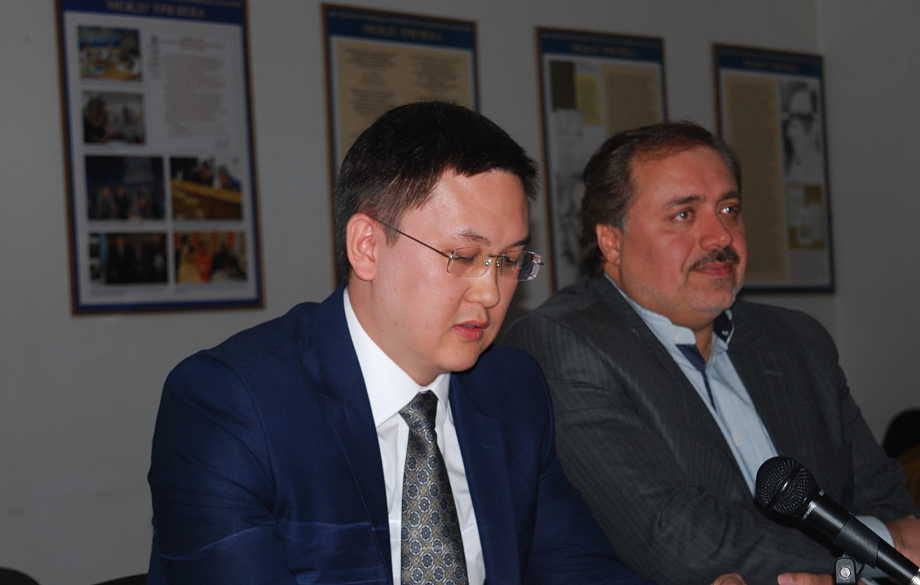
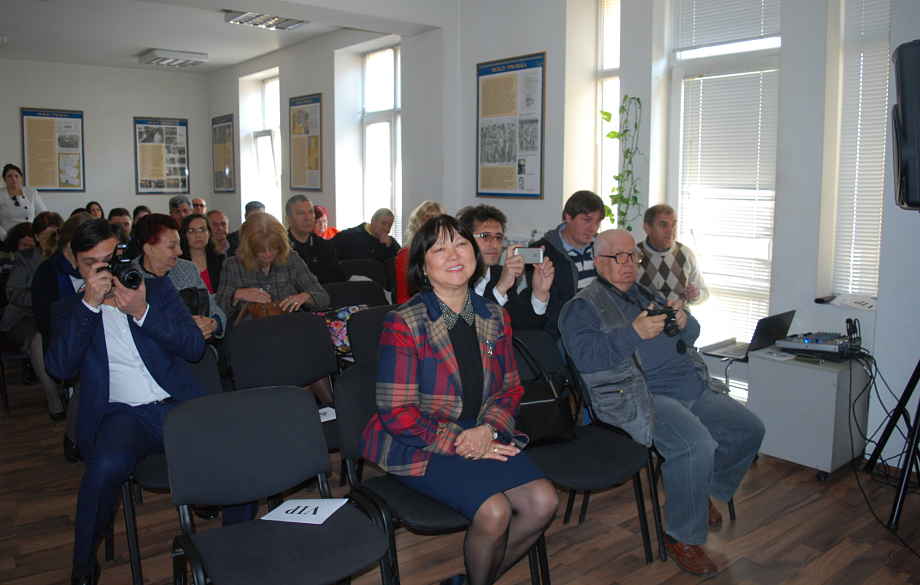
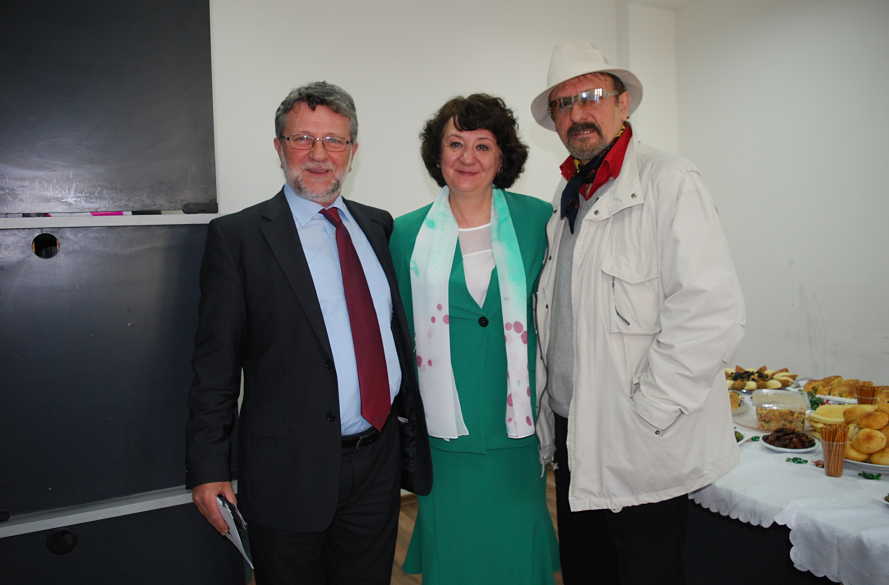
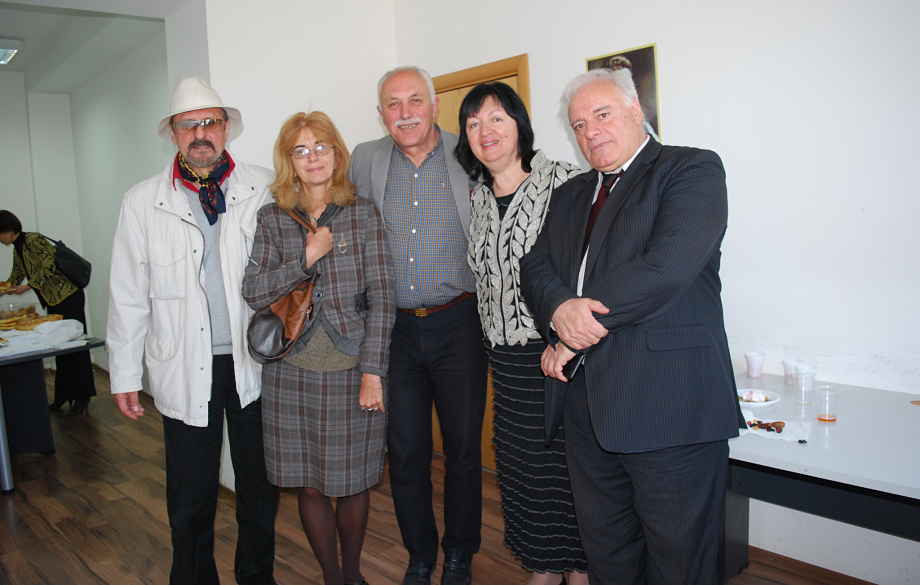
Images: 1 – Tsetska Danova;
2-9 - Marie Kanalyan Chairwoman of the Union of Bulgarian Journalists Mrs. Snezhana Todorova welcomes guests at the round table with a "Welcome!". The chief editor of "Diplomatic spectrum" magazine Mrs. Ekaterina Pavlova emphasized the purpose of the event - the promotion of Novruz as part of the Intangible Cultural Heritage of Humanity. Mrs. Gulmira Bakirova from Kazakhstan lectured on the common moments of the celebration in different countries.
5. Participants in the roundtable were /left to right/: Ch. Assist. Prof.Yelis Erolova by the Institute of Ethnology and Folklore Studies with Ethnographic Museum at BAS, Mrs. Vyusala Sadagova, Third Secretary at the Embassy of the Republic of Azerbaijan, Mr. Baurzhan Sarsembekov, Second Secretary at the Embassy of the Republic of Kazakhstan Mr. Mohammadali Kiani, advisor of the cultural Affairs at the Embassy of the Islamic Republic of Iran.Among the audience some journalists and cultural figures could be seen.
7, 8. Mr. Goce Georgievski, Temporary in charge of the Embassy of the Republic of Macedonia, Minister Counsellor, Mrs. Ekaterina Pavlova, chief editor of the"Diplomatic spectrum" magazine and Mr. Hristo Paskalev, president of the association "Spectrum 21st Century " and others.
9. Students from the Russian Lyceum in Sofia headed by Mrs. Shara Karsakpaeva greeted the guests with poems dedicated to the holiday.
10, 11, 12. The festive feast of Novruz